|
|
Helping Companies Rethink, Recover & Refocus on the Future
Call John Grubbs (903) 295-7400
 |
 |
 |
 |
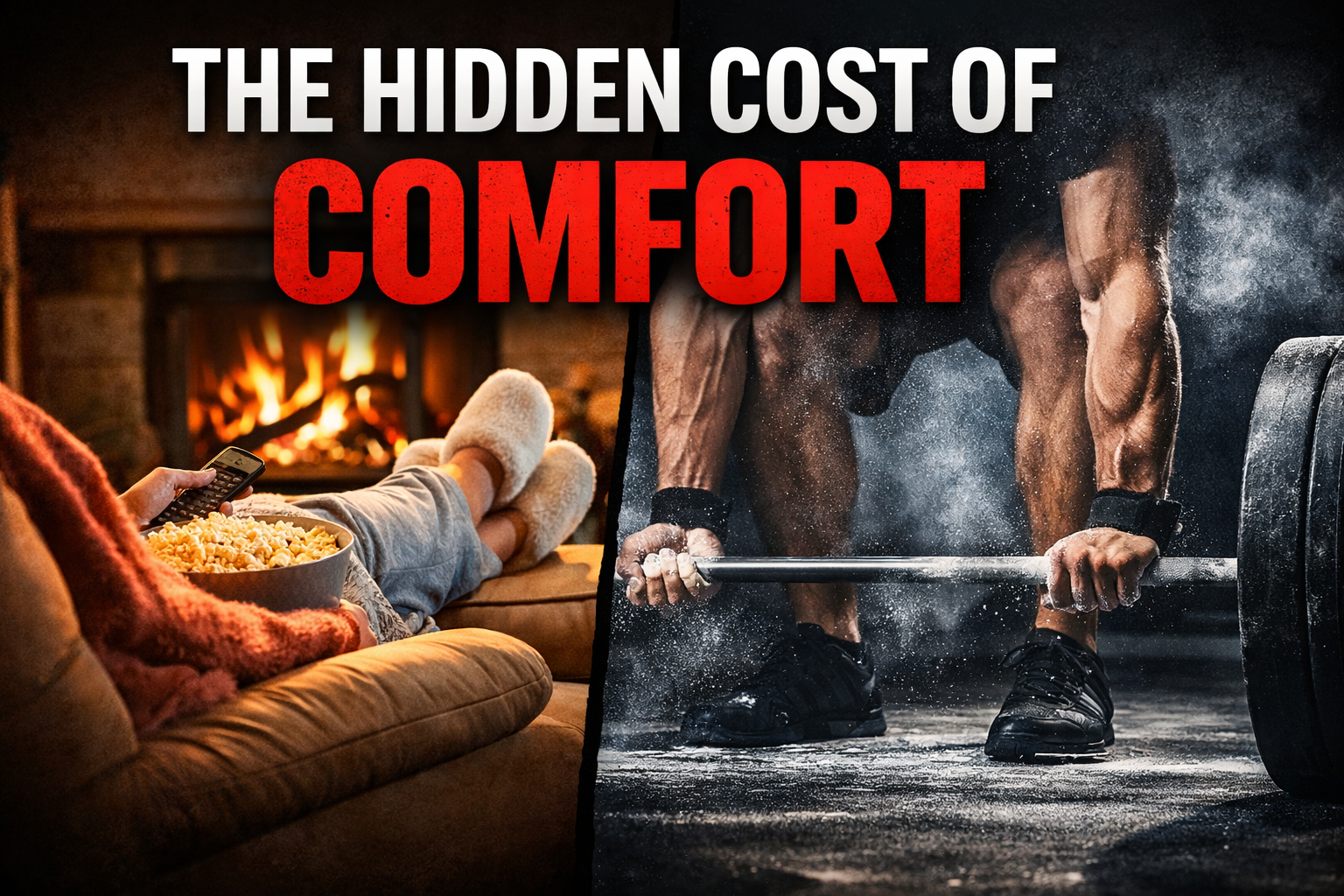
We have made life too easy, and it is starting to show.
Most of what used to require effort has been engineered out of our daily lives. We control temperature with a button. Food is always available. Work is increasingly sedentary. Even inconvenience has been reduced to a minor annoyance rather than a real disruption.
On the surface, this looks like progress. In many ways, it is. But there is a side of this equation that we do not talk about enough.
As comfort has increased, our capacity has declined.
You can see it physically. People are weaker, less durable, and more prone to fatigue. But it is not just physical. It shows up psychologically and inside organizations as well. Lower tolerance for stress. Difficulty handling pressure. A tendency to avoid anything that feels hard.
This is not a coincidence. It is how the human system works.
The body does not respond to comfort. It responds to stress.
If you want strength, you have to give the body a reason to build it. Muscle does not grow because you want it to. It grows because it is forced to. Bone density improves under load. The cardiovascular system becomes more efficient when it is pushed beyond what is comfortable.
Remove that demand, and the body starts shutting down capacity that it no longer needs.
This is what antifragility really means. The body does not just tolerate stress. It requires it to improve. Without it, you do not stay the same. You decline.
That is the part most people underestimate.
Comfort is not neutral. It is a slow erosion of capability.
Michael Easter makes this point clearly in The Comfort Crisis. When humans remove challenge from their environment, they do not become more at ease. They become less capable. The range of what they can handle shrinks. And when that range shrinks, even normal levels of stress begin to feel overwhelming.
The same pattern shows up in the mind.
You do not build resilience by avoiding difficulty. You build it by going through it. But most people today are doing the opposite. They avoid hard conversations. They avoid physical strain. They avoid uncertainty. Then they wonder why small problems feel big.
This is not about personality. It is about exposure.
When you are not regularly challenged, your tolerance drops. Things that used to be manageable start to feel like pressure. Feedback feels personal. Deadlines feel aggressive. Accountability feels...